

How to Remove Blinds from Window: A Step-by-Step Guide
If you are planning to upgrade your window treatments, clean around your windows, repaint a room, or replace old hardware, the first step is learning how to remove blinds from window safely. Removing blinds may look simple, but the process can vary depending on the type of blind, bracket style, and mounting system.
Some blinds lift out easily once the brackets are opened. Others use hidden clips, spring-loaded pins, side brackets, or screws that need to be released carefully. If you pull too hard or force the headrail, you can damage the blinds, brackets, wall, trim, or window frame.
At Blinds Crafter, we help homeowners remove, replace, and upgrade window treatments with care. This guide explains how to take down blinds step by step, what tools you may need, and how to handle common blind types such as mini blinds, Venetian blinds, vertical blinds, cordless blinds, and roller shades.
When Is It Time to Take Down Your Window Blinds?
There are several reasons you may need to remove blinds from a window. You may be replacing outdated blinds with modern roller shades, upgrading to motorized shades, repairing damaged brackets, cleaning the window frame, painting the wall, or preparing for new window treatment installation.
Old blinds can also become difficult to operate over time. Slats may bend, cords may stop working, brackets may loosen, or the blinds may no longer match the design of the room. In these situations, removing the blinds properly helps prepare the space for a cleaner, safer, and more attractive window treatment solution.
If your blinds are damaged, stuck, unusually heavy, or installed in a hard-to-reach area, professional removal may be the safer option.
Tools You May Need Before You Start
Before removing your blinds, gather a few basic tools. Having everything ready will make the job easier and help prevent dropped screws or damaged hardware.
You may need:
- A flathead screwdriver
- A Phillips screwdriver
- A small step stool or ladder
- A container for screws and brackets
- Work gloves for dusty or older blinds
- A flashlight for hidden brackets
- A utility knife if paint is sealing the bracket edges
As you follow the How to remove blinds from window steps, make sure to clear the area around the window before starting. Move furniture, lamps, plants, and fragile items away from the work area so you have enough space to move safely. If the blinds are wide or heavy, it is better to have another person help support the headrail while you release the brackets.
Identify the Type of Blinds You Have
Before you start removing anything, identify the type of blinds installed on your window. Different blind styles use different mounting systems.
Mini blinds usually have a narrow headrail and small horizontal slats. Venetian blinds are similar but may use wider slats made from wood, faux wood, aluminum, or vinyl. Vertical blinds hang from a top track and have individual vertical vanes. Roller shades use a fabric roll mounted on a tube. Cordless blinds may use spring-loaded or hidden bracket systems.
Knowing the blind type helps you avoid forcing the wrong part. Most damage happens when someone pulls on the headrail without first releasing the bracket or clip.
Understanding How Window Blinds Are Installed
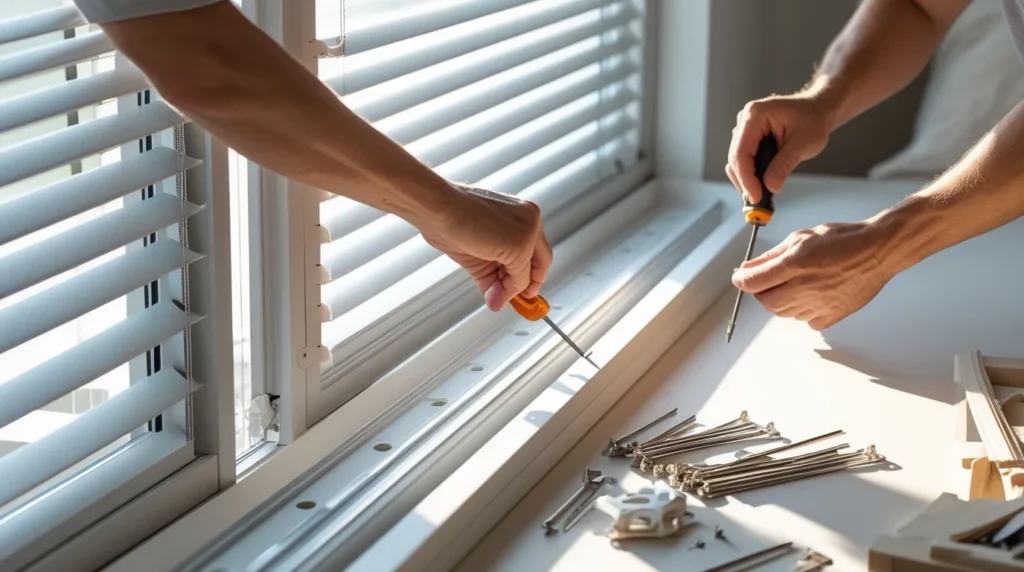
Most blinds are installed with mounting brackets at the top of the window. These brackets may be attached inside the window frame or outside the frame above the trim. The top part of the blind is called the headrail. The headrail holds the blind mechanism and connects to the brackets.
Some brackets have small front flaps that snap open. Others have hidden release tabs, side clips, or screws. Roller shades may use a pin-and-bracket system instead of a standard headrail. Vertical blinds usually use a track system that holds the individual slats.
Before pulling the blinds down, look closely at the brackets. If the blind does not move easily, stop and check for a clip, screw, or locking tab.
How to Remove Blinds from Window in 7 Steps
Follow these steps to remove most standard horizontal blinds safely.
1. Raise the Blinds Completely
Start by raising the blinds all the way up. This keeps the slats together and makes the blinds easier to handle. If the blinds have a cord, pull the cord to lift the slats. If they are cordless, gently push the bottom rail upward.
Do not remove blinds while the slats are fully lowered. They can swing, bend, or make the headrail harder to control.
2. Secure the Slats
Once the blinds are raised, keep them steady with one hand. For wide blinds, ask someone to hold the other side. This is especially important for faux wood or wood blinds, which can be heavier than aluminum or vinyl mini blinds.
3. Locate the Mounting Brackets
Look at both ends of the headrail. Most blinds have brackets on the left and right sides. Wider blinds may also have a center support bracket. The brackets may be visible from the front, or they may be hidden behind the headrail.
Use a flashlight if needed to see the bracket shape and release mechanism.
4. Open or Release the Brackets
If the brackets have a front cover, use your fingers or a flathead screwdriver to gently open the flap. If there is a hidden tab, press or lift it carefully. Some brackets require you to push the headrail slightly backward before lifting it out.
Avoid using too much force. If the bracket does not open, check for a screw or latch.
5. Support the Headrail
Before lifting the blinds out, support the headrail with both hands. Blinds can drop suddenly once the brackets release. If the blind is large, heavy, or installed high on the wall, have another person help.
6. Lift the Blinds Out
Once the brackets are open, tilt the headrail slightly forward and lift it out of the brackets. Move slowly so you do not scrape the wall, window frame, or trim.
7. Remove the Brackets if Needed
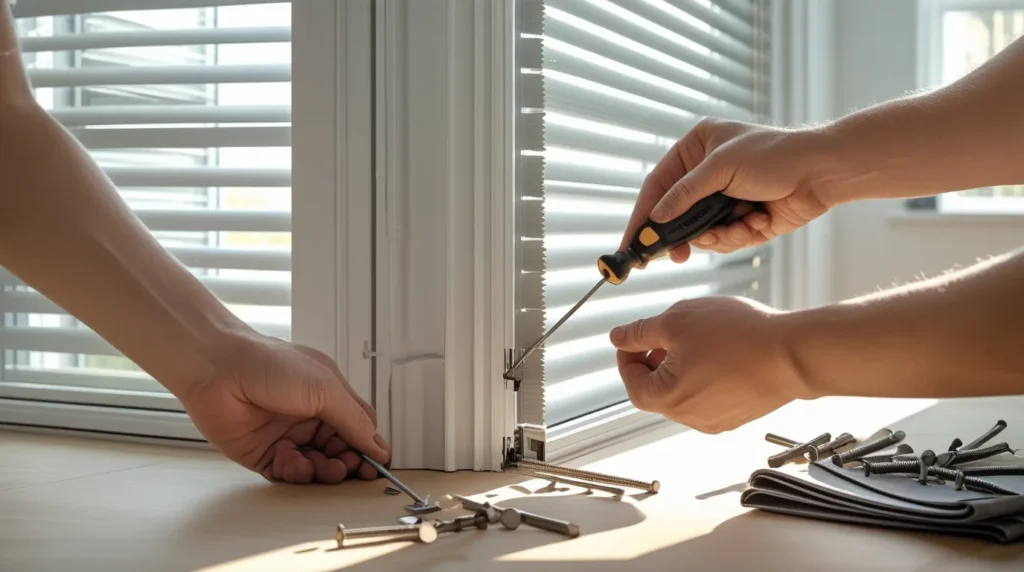
As part of the How to Remove Blinds from Window process, you may also need to remove the mounting brackets if you are replacing the blinds. Use a screwdriver to carefully take out the screws, and keep the screws and brackets in a small container if you plan to reuse them. If you are installing new window treatments, your new system may require different brackets, so check the installation requirements before reusing the old hardware.
How to Remove Blinds with Hidden Brackets
Hidden brackets can make blind removal confusing because the release mechanism is not always visible from the front. These brackets are common on many modern blinds.
Start by looking behind and underneath the headrail. Feel for a small tab, clip, or spring-loaded piece. In many cases, you will need to press the tab with a flathead screwdriver while gently pulling the headrail forward.
Some hidden brackets release when you push the headrail backward and then tilt it down. Others release when you lift the headrail upward and pull it toward you. If it does not move, check both ends and the center of the blind for additional brackets.
Do not pry aggressively. Hidden brackets are designed to hold firmly, but they should release once the correct tab or clip is pressed.
How to Remove Vertical Blinds
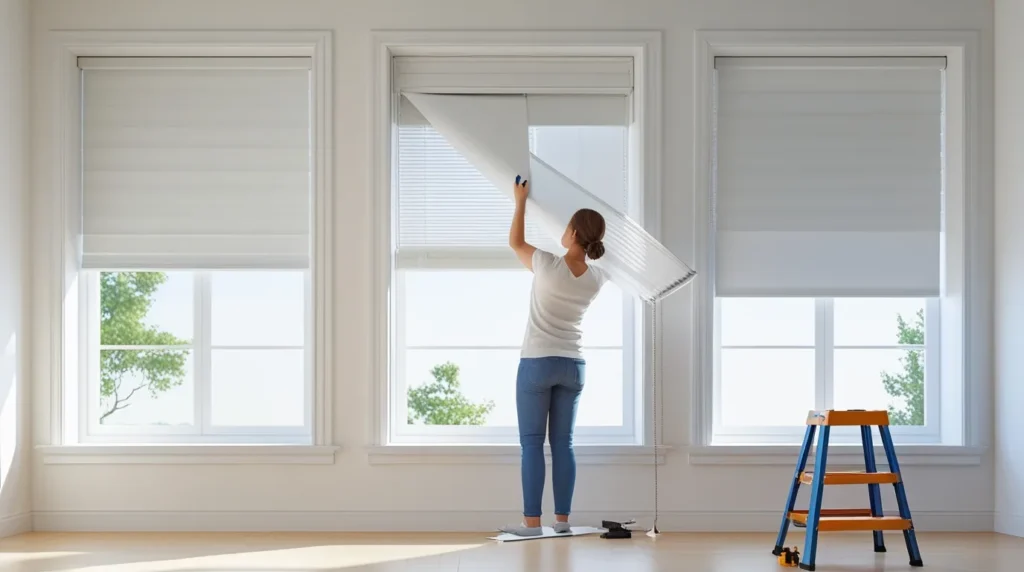
Vertical blinds are removed differently from horizontal blinds. First, rotate the vanes so they are open and easy to access. Then unhook each vertical slat from the carrier clips along the track.
After removing the vanes, inspect the headrail or track. Most vertical blind tracks are attached to brackets that either snap open or unscrew from the wall or ceiling. Support the track while releasing the brackets so it does not fall.
Vertical blind vanes can crack or bend if handled roughly, especially older vinyl vanes. Stack them neatly after removal if you plan to reuse them.
How to Remove Mini Blinds and Venetian Blinds
Mini blinds and Venetian blinds usually use a standard headrail and bracket system. Raise the blinds first, open the bracket covers, and lift the headrail out.
Mini blinds are lightweight, but the slats can bend easily. Venetian blinds made from wood or faux wood may be heavier, so support the weight before releasing the brackets.
If the brackets are painted over, use a utility knife to gently score around the edges before opening them. This can prevent paint from peeling off the wall or trim.
How to Remove Cordless Blinds
As part of the How to Remove Blinds from Window process, cordless blinds require extra care because they often use spring-loaded brackets or hidden clips. Start by raising the blind fully, then look for release tabs near the top of the headrail. Press the tabs gently while lifting or tilting the headrail out of the brackets.
Because cordless blinds use internal tension systems, avoid pulling on the bottom rail or forcing the shade downward during removal. If the blind feels stuck, inspect the bracket from the side and underneath before applying more pressure.
How to Remove Roller Shades
Roller shades are usually mounted with a tube, a pin end, and a control end. To remove a roller shade, hold the shade with both hands. Push the spring-loaded pin end inward, then slide that side out of the bracket. Once one end is free, the other side should lift out easily.
If your roller shade has a chain control, remove it carefully from the bracket side. If the shade is motorized, check whether there is a battery wand, charging cable, or motor connection before removing the shade.
For motorized shades, avoid pulling on wires or forcing the tube. If you are unsure, professional help is safer.
Common Problems When Removing Blinds
Sometimes blinds do not come down easily. Here are a few common issues:
- Painted-over brackets can hold the hardware tightly against the wall or trim.
- Stripped screws may make bracket removal difficult.
- Hidden center support brackets can keep the headrail locked in place.
- Old plastic clips may become brittle and break.
- Heavy faux wood blinds may require two people for safe removal.
If the blinds feel stuck, do not yank them. Check for extra brackets, hidden screws, or paint buildup. A slow side-to-side wiggle is safer than pulling straight down with force.
Removing Window Blinds in Saddle River, NJ Homes
Some homes in Saddle River, NJ may have older window frames, custom trim, deep-set windows, or previous layers of paint around the brackets. These details can make blind removal more delicate.
If the blinds were installed many years ago, the hardware may not match modern systems. Screws may be hidden, brackets may be painted shut, or the headrail may be difficult to release. Take your time and inspect the installation before applying pressure.
For homeowners preparing to upgrade their window treatments, professional removal and installation can help protect the window frame, trim, and wall surface.
What to Do After Removing Old Blinds
Once the blinds are removed, clean the window frame, sill, and surrounding trim. This is also a good time to inspect for loose screws, wall damage, old bracket holes, dust buildup, or peeling paint.
If you are installing new blinds, shades, or curtains, measure the window carefully before ordering. Window measurements should be accurate, especially for inside-mount treatments. Even a small measuring mistake can affect the final fit.
If you are upgrading the room, consider whether your new window treatments should provide more privacy, better light control, improved insulation, or a more decorative finish.
What to Do with Old or Damaged Blinds
If your old blinds are still in good condition, you may be able to donate them or reuse them in another space. Some homeowners save brackets and screws for future projects.
If the blinds are broken, bent, or no longer usable, check whether local recycling options are available. Aluminum blinds may be recyclable, while fabric, vinyl, or mixed-material blinds may need different disposal methods.
Before recycling, remove cords, plastic parts, and non-recyclable pieces when possible. Avoid throwing large blinds away unless disposal is the only option available.
When to Call a Professional
DIY blind removal is possible in many cases, but it is not always the best choice. You should consider professional help if the blinds are very large, installed high above the floor, motorized, stuck in the brackets, mounted into delicate trim, or connected to electrical components.
A professional can remove old blinds without damaging the window frame, wall, or surrounding finish. This is especially helpful if you are preparing for a new window treatment installation.
Blinds Crafter can help with removal, product selection, measurement, and installation so your windows are ready for a fresh, updated look.
Upgrade Your Windows After Blind Removal
Removing old blinds is often the first step toward improving the comfort and style of your home. Once the old blinds are down, you can choose a better solution for your space.
Roller shades offer a clean and modern appearance. Cellular shades can improve comfort and insulation. Roman shades add softness and style. Vertical blinds work well for large windows and sliding doors. Motorized shades provide convenience and easy control. Custom curtains and drapery add warmth, texture, and a more finished design.
If you are not sure which option is right for your home, Blinds Crafter can help you compare materials, styles, and operating systems based on your room, window size, light exposure, and privacy needs.
Learning how to remove blinds from window can help you clean, repair, repaint, or prepare for new window treatments with confidence. The most important steps are identifying your blind type, locating the brackets, releasing the headrail carefully, and avoiding unnecessary force.
If your blinds are simple and easy to reach, this can be a manageable DIY project. If the blinds are heavy, stuck, motorized, or installed in a difficult area, professional removal is the safer choice.
Ready to replace old blinds with updated window treatments? Contact Blinds Crafter today to schedule a consultation and explore custom shades, blinds, curtains, and drapery for your home.
FAQ: How to Remove Blinds from Window
Can I remove blinds from a window myself?
Yes, many standard blinds can be removed by homeowners using a screwdriver and careful handling. However, heavy, stuck, or motorized blinds may require professional help.
How do I remove blinds with hidden brackets?
Do I need tools to remove window blinds?
In many cases, you only need a screwdriver. Some blinds can be released by hand, while others require you to loosen screws or open bracket covers.
How do I remove roller shades from brackets?
Hold the roller shade with both hands, push the spring-loaded pin end inward, and slide that side out of the bracket. Then remove the opposite side from its bracket.
Should I remove old brackets before installing new blinds?
Yes, if the new blinds use a different mounting system. If the brackets match the new blinds, they may be reusable, but it is usually better to follow the new product’s installation requirements.