

Choosing window blinds sounds simple until you start comparing real options. Wood or faux wood? Vertical or horizontal? Standard size or custom fit? Cordless, motorized, moisture-resistant, blackout, light-filtering?
This is where many homeowners slow down. Not because they do not care, but because blinds are one of those home upgrades that look easy from a distance and become very specific once you measure the window, think about sunlight, privacy, room function, and daily use.
That is exactly why custom blinds matter.
Unlike ready-made blinds pulled from a shelf, custom window blinds are measured and selected for your actual windows, your interior style, and the way you live in the space. A kitchen window facing afternoon sun does not need the same treatment as a bedroom window facing the street. A wide patio door needs a different solution than a narrow bathroom window. Good blinds are not just decorative. They solve problems.
What Are Custom Window Blinds?
Custom blinds are window coverings made or selected to fit the exact size, shape, and needs of your windows. Instead of adjusting your expectations to a limited store size, the blinds are planned around your home.
That difference is bigger than it sounds.
With standard blinds, small gaps on the sides, awkward lengths, uneven stacking, or poor light control are common. With custom blinds for windows, the fit is cleaner, the operation is smoother, and the finished look feels intentional. You also get more control over materials, colors, slat sizes, lift systems, privacy levels, and light filtering.
In short: custom blinds help the window look finished, not just covered.
Why Window Blinds Are Still One of the Smartest Choices
Trends come and go, but custom window blinds remain one of the most practical choices because they control light, protect privacy, and work well in almost every room.
Curtains can soften a room beautifully, but they do not always offer precise light control. Shades can look clean and modern, but they usually roll or lift as one piece. Blinds give you more flexibility. You can tilt the slats slightly for filtered daylight, close them fully for privacy, or raise them when you want a wide-open view.
That level of control is the reason blinds continue to be a practical choice for living rooms, bedrooms, offices, kitchens, bathrooms, and large glass doors.
7 Popular Types of Custom Window Blinds
1. Wood Blinds
Wood blinds bring warmth, texture, and a more finished interior look. As one of the most classic custom window blinds options, they work especially well in living rooms, dining rooms, home offices, and bedrooms where style matters as much as function.
They are a strong choice when you want blinds that feel classic rather than basic. The natural grain adds depth, and the wider slats can make a window feel more architectural.
Best for: living rooms, offices, bedrooms, traditional interiors, warm design styles.
2. Faux Wood Blinds
Faux wood blinds are one of the most practical options for busy homes. They give you the look of wood but are usually more resistant to moisture and everyday wear.
That makes them useful in kitchens, bathrooms, laundry rooms, and homes with children or pets. For homeowners who want custom window blinds with a polished look and better day-to-day durability, faux wood is often a smart middle ground.
Best for: kitchens, bathrooms, humid rooms, family homes, rental properties.
3. Vertical Blinds
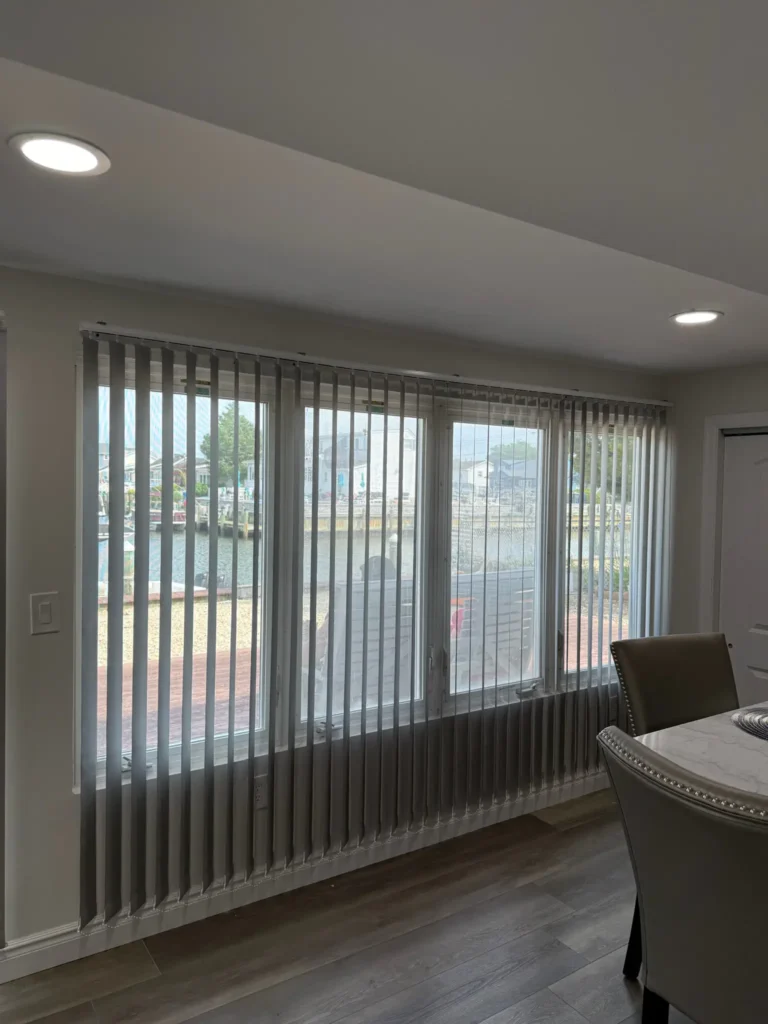
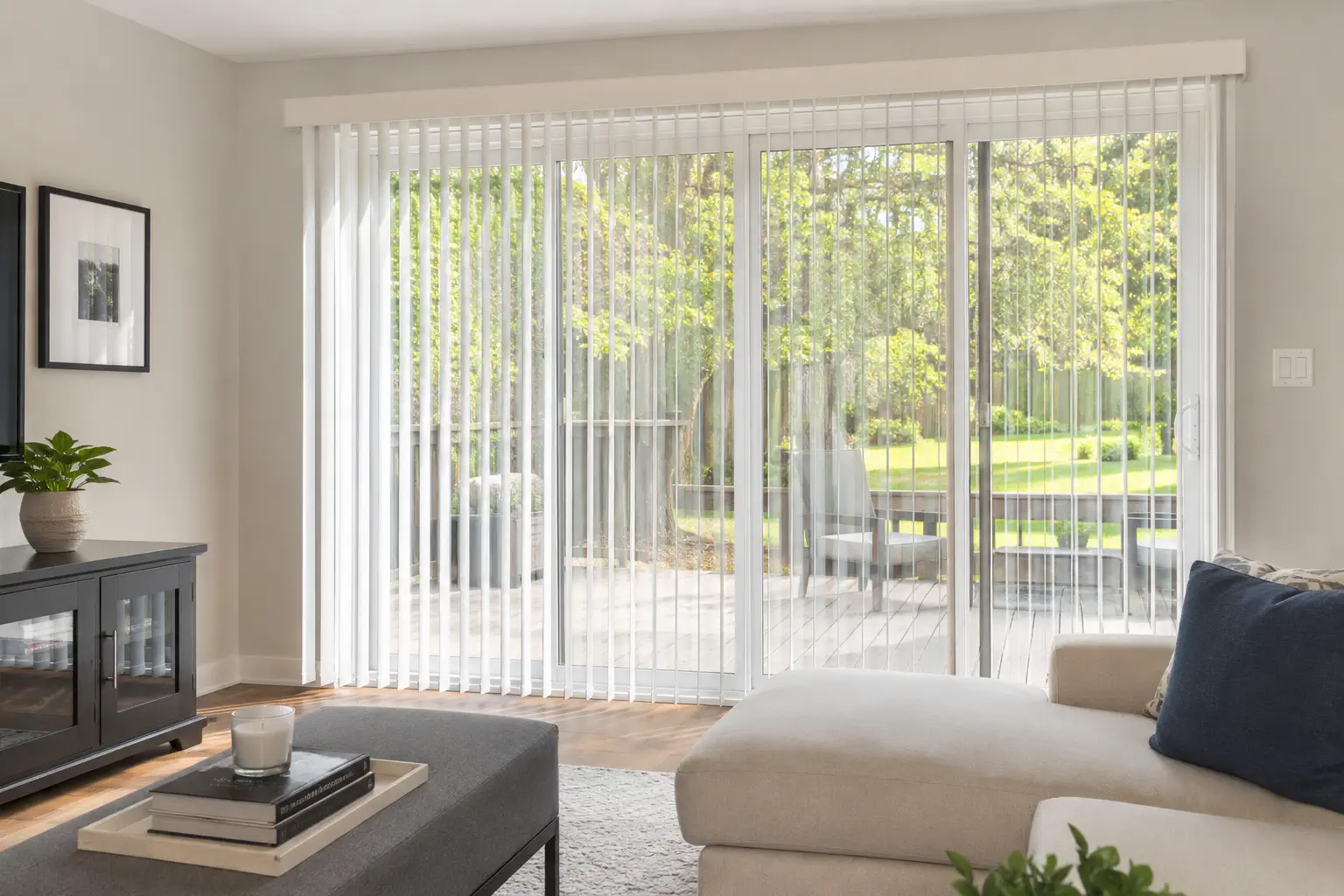
Vertical blinds are built for wide openings. Think sliding glass doors, patio doors, large windows, and rooms where horizontal blinds would feel heavy or awkward.
Custom vertical blinds are especially useful because large openings rarely behave like standard windows. A custom fit helps the vanes hang properly, move smoothly, and cover the glass without looking unfinished.
They also make sense in rooms where you need easy access to a door. Instead of lifting the entire blind, you simply slide the vanes open. Among custom window blinds, vertical blinds are often one of the most practical choices for wide glass areas.
Best for: patio doors, sliding doors, large windows, sunrooms, wide glass areas.
4. Mini Blinds
Mini blinds are simple, affordable, and practical. They usually have narrower slats and are often used in apartments, offices, utility rooms, and budget-conscious projects.
They may not create the same upscale look as wood or faux wood, but they do the job. For certain spaces, that is enough.
Best for: offices, rentals, utility rooms, budget-friendly updates.
5. Aluminum Blinds
Aluminum blinds are lightweight, durable, and easy to maintain. They can work well in modern spaces, commercial settings, and rooms where function is the priority.
They are also a good option for people who want a cleaner, more minimal look without fabric.
Best for: offices, modern interiors, workspaces, high-use rooms.
6. Motorized Blinds
Motorized blinds are no longer just a luxury feature for high-end homes. They are becoming more common because they make daily control easier, especially for hard-to-reach windows, large windows, bedrooms, and smart homes.
They can be controlled by remote, wall switch, app, or smart-home integration depending on the system. For families with children or pets, cordless motorized options also create a cleaner and safer appearance.
When combined with custom window blinds, motorization becomes even more useful because the blinds are designed around the exact size, height, and function of each window.
Best for: smart homes, bedrooms, media rooms, high windows, large windows.
7. Custom Blinds for Specialty Windows
Some windows simply do not work well with off-the-shelf products. Tall windows, narrow windows, oversized windows, bay windows, and unusual layouts often need a more thoughtful solution.
This is where custom blinds show their real value. Instead of forcing a standard product into a non-standard space, the blind is selected around the window’s actual dimensions and use case.
Best for: bay windows, oversized windows, unique layouts, statement windows.
Choosing the Right Material
Material choice affects more than appearance. It changes durability, privacy, maintenance, and how the blinds behave over time.
Wood feels warm and premium, but it is better suited for dry rooms.
Faux wood is more forgiving in moisture-prone areas.
Aluminum is lightweight and practical.
Vinyl can be budget-friendly and easy to clean.
Fabric-backed or specialty options may offer softer light control, depending on the design.
A good rule: do not choose material based only on color. Think about the room first. A bathroom needs moisture resistance. A bedroom may need privacy and darkness. A living room may need a balance of light, view, and style.
The best blinds for windows are the ones that match the way the room is actually used.
Where Custom Window Blinds Work Best
Living Rooms
Living rooms usually need flexible light. You may want natural daylight during the day, privacy in the evening, and a clean look from both inside and outside. Wood blinds, faux wood blinds, and motorized blinds are strong options here.
Bedrooms
Bedrooms need privacy first. Light control comes right after. If the room gets strong morning light, consider options that close tightly or pair blinds with curtains for better darkness.
Kitchens
Kitchens deal with moisture, heat, and cleaning. Faux wood or other easy-care materials are usually better than delicate materials.
Bathrooms
Privacy and moisture resistance matter most. Faux wood blinds are often a smart fit because they handle humidity better than natural wood.
Patio Doors and Sliding Doors
This is where custom vertical blinds often make the most sense. They move side to side, allow easy door access, and cover wide glass areas without looking forced.
Home Offices
Glare control is the big issue. The right blinds can reduce screen glare without making the room feel dark. Adjustable slats are useful because the light changes throughout the day.
How Much Do Custom Window Blinds Cost?
The cost of custom blinds depends on several details, and this is where honest guidance matters. There is no single price that fits every home because every window, material, and installation condition is different.
The main cost factors include:
- Window size and number of windows
- Blind type and material
- Manual, cordless, or motorized operation
- Inside mount or outside mount
- Specialty shapes or oversized windows
- Installation complexity
- Customer preferences for finish, color, and control system
A small standard bedroom window with faux wood blinds will not price the same as a large patio door with custom vertical blinds or a motorized system for multiple windows.
For the most accurate quote, measurements should be taken properly and the space should be reviewed before final pricing. That is not a sales trick. It is how you avoid poor fit, surprise gaps, and the wrong product for the room.
Custom Blinds vs. Ready-Made Blinds
Ready-made blinds can work for quick fixes. They are easy to buy, and for simple windows, they may be enough.
But custom blinds are different in the areas that matter long term:
Better fit: Less awkward spacing and cleaner coverage.
Better style control: More choices in color, finish, slat size, and material.
Better function: The blind is selected for the room’s privacy, light, and access needs.
Better finish: The window looks designed, not patched together.
If you are updating one temporary room, ready-made may be fine. If you are improving a main living area, bedroom, office, or patio door, custom is usually the better investment.
Mistakes to Avoid When Buying Blinds
The biggest mistake is choosing by appearance alone. A blind can look great in a sample photo and still be wrong for your room.
Watch out for these common issues:
- Choosing real wood for a humid bathroom
- Ignoring how much direct sun the room gets
- Measuring only once
- Forgetting about window handles or door movement
- Picking the cheapest option for a high-use room
- Not considering cordless or motorized controls
- Treating every room the same
Good blinds are selected room by room. That is how you get a result that feels natural across the home instead of repetitive or mismatched.
Are Custom Window Blinds Worth It?
For most homeowners, yes — especially when the windows are visible, used daily, unusually sized, or important to the comfort of the room.
Custom window blinds can improve privacy, reduce glare, make rooms feel more finished, and give you better control over natural light. They can also help create a more consistent look across the home, which matters more than people realize.
Window treatments are not the loudest design element in a room. But when they are wrong, you notice. When they are right, the whole space feels cleaner.
Final Buying Advice
Start with the room, not the product.
Ask yourself:
- Do I need privacy, light control, or both?
- Is this room humid or dry?
- Do I open this window or door often?
- Is the window standard, wide, tall, or unusual?
- Do I want manual, cordless, or motorized control?
- Should the blinds stand out or blend into the room?
Once those answers are clear, choosing the right custom window blinds becomes much easier.
The best blinds are not always the most expensive. They are the ones that fit properly, work smoothly, and make sense for the way you use your home every day.