

15 Kitchen Window Valance Ideas That Balance Style and Function
The best kitchen window valance ideas do more than add fabric above a window. A well-designed valance should complement the cabinets, frame the view, conceal mounting hardware, and withstand the moisture, cooking residue, and daily activity found in a real kitchen.
The most useful kitchen window valance ideas begin with the location of the window, the level of privacy required, and whether the valance will be used alone or layered over a blind or shade.
At Blinds Crafter, we create custom window treatments for family homes, apartments, offices, staff kitchens, and commercial interiors. Rather than choosing a valance from a picture alone, we recommend evaluating the complete window: its location, dimensions, surrounding surfaces, light exposure, and cleaning requirements.
Explore our complete range of custom window treatments for residential and commercial spaces.
What Does a Kitchen Window Valance Actually Do?
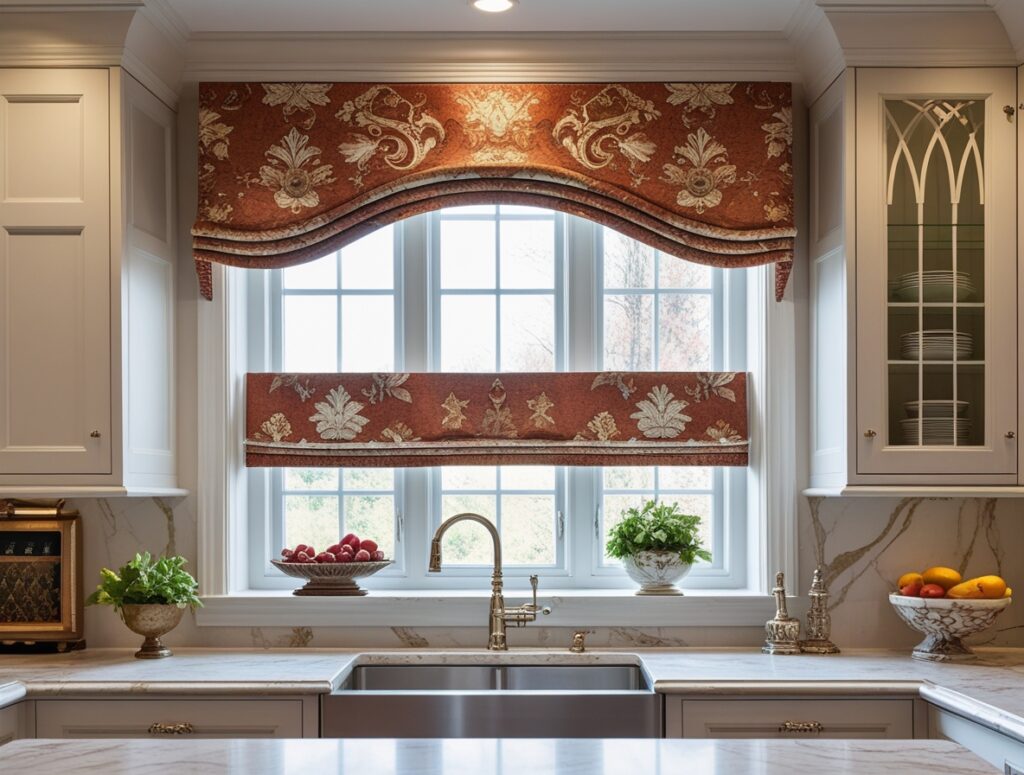
Many kitchen window valance ideas use a short decorative treatment installed across the upper portion of the window to add structure without covering the entire glass area.
It can:
- Conceal curtain rods, blind headrails, and mounting hardware.
- Add color, texture, or pattern without covering the entire window.
- Make a standard-size window look more intentional and finished.
- Visually connect the window with cabinets, countertops, or nearby fabrics.
- Soften the appearance of blinds and shades.
A valance should not be treated as a complete privacy solution. Because it covers only the top portion of the window, it usually leaves most of the glass exposed.
When privacy, glare reduction, or stronger light control is required, combine the valance with a properly fitted blind or shade. Our custom window blinds guide explains how different materials and operating systems perform in kitchens and other frequently used rooms.
Use the Three-Zone Kitchen Window Test
Before comparing kitchen window valance ideas, identify which kitchen zone the window belongs to and how much moisture, heat, or cooking residue the treatment may encounter. This practical test helps prevent selecting a beautiful treatment that becomes difficult to maintain after installation.
Zone 1: Sink and Splash Area
A window positioned above or beside the sink may be exposed to moisture, water spots, soap residue, and frequent hand contact.
The best options for this area are:
- Tailored valances with limited fabric volume.
- Washable polyester or performance-fabric blends.
- Simple shapes without tassels, fringe, or deep folds.
- Designs mounted high enough to stay clear of the faucet.
Avoid oversized swags and highly absorbent fabrics in a busy sink area. They may collect moisture and require more frequent cleaning.
Zone 2: Cooking and Grease Area
Windows close to a cooktop, range, or food-preparation area require greater caution. Airborne grease and cooking residue can settle into fabric, especially when the material has deep pleats or a textured surface.
Choose a compact, easy-to-clean treatment and make sure it remains safely separated from open flames, hot surfaces, and appliance ventilation areas. In some layouts, a moisture-resistant blind or shade without a fabric valance may be the more practical solution.
Zone 3: Breakfast Nook or Low-Impact Area
Windows in breakfast corners, dining sections, office kitchens, or areas away from the sink and range allow more decorative freedom.
These windows can support:
- Softer folds.
- Decorative trims.
- Natural linen textures.
- Larger patterns.
- Layered curtains and valances.
- More structured cornice-style designs.
The Three-Zone Test creates a better starting point than selecting a valance based only on color or decorating style.
1. Tailored Flat Valances for Modern Kitchens
Among modern kitchen window valance ideas, a tailored flat valance is one of the most versatile choices for contemporary interiors. Its clean horizontal line works well with shaker cabinets, slab-front cabinetry, quartz countertops, and simple hardware.
Choose a solid fabric for a minimalist look or add narrow contrast banding along the lower edge for a more customized finish.
Because the fabric remains relatively flat, this style is also easier to maintain than heavily gathered designs.
2. Box-Pleated Valances for Architectural Structure
Box pleats create controlled folds that give the window a more structured appearance. They work especially well above wide sink windows, paired windows, and traditional cabinetry.
To keep the design from looking too formal, use:
- Medium-weight fabric.
- A limited number of pleats.
- A neutral or small-scale pattern.
- Clean, unembellished edges.
A custom box-pleated valance can also help visually balance a window that appears too narrow in relation to the cabinets around it.
3. Relaxed Valances for Softer Interiors
A relaxed valance has a gentle curve through the center rather than a rigid horizontal edge. It can soften kitchens dominated by straight cabinet lines, rectangular tiles, and hard countertop surfaces.
This style suits transitional, cottage, and understated traditional interiors. It is best used away from heavy splash and cooking zones because the curved fabric creates more depth than a flat valance.
4. Scalloped Valances for Traditional Character
A scalloped lower edge introduces shape without requiring excessive fabric. It works well in country kitchens, traditional homes, and interiors with decorative cabinet molding.
For a more current appearance, avoid overly ornate trims. A simple scallop in a solid, striped, or small botanical fabric usually looks cleaner than a heavily ruffled design.
5. Neutral Linen-Look Valances
For homeowners exploring neutral kitchen window valance ideas, linen-look fabric adds natural texture while keeping the room light and understated. Warm white, flax, oatmeal, and pale taupe can coordinate with wood floors, stone surfaces, and neutral cabinetry.
Natural linen can wrinkle and absorb moisture, so a washable linen-blend or performance fabric may be more practical for a working kitchen.
A neutral valance is also easier to coordinate when the cabinets, wall color, or backsplash may change in the future.
6. Contrast-Banded Valances
A solid valance with a contrasting lower border offers a custom appearance without using a busy pattern.
Possible combinations include:
- Warm white with navy trim.
- Beige with dark brown banding.
- Soft gray with black edging.
- Cream with sage green trim.
- Natural linen with a fabric matching the dining chairs.
This technique can connect the window with smaller details such as cabinet handles, pendant lights, bar stools, or countertop veining.
7. Cabinet-Coordinated Valances
The valance does not need to match the cabinets exactly. It can repeat the cabinet color in a stripe, border, or small section of the pattern.
For example, a kitchen with blue cabinets may use an off-white valance containing narrow blue details. This creates continuity without turning the entire window into one block of color.
In wood kitchens, consider a fabric that reflects the warmth of the wood rather than trying to reproduce the exact stain.
8. Backsplash-Inspired Patterns
A valance can draw from the backsplash without copying it directly.
If the backsplash contains several colors, choose one secondary shade for the valance. If the backsplash is visually busy, use a quieter fabric. If the backsplash is plain, the valance can introduce a controlled pattern.
This approach helps the treatment feel connected to the room instead of appearing as a separate decorative accessory.
9. Small-Scale Patterns for Compact Windows
Small kitchen windows can quickly look crowded when covered with large florals, deep pleats, or oversized checks.
Better options include:
- Narrow stripes.
- Small geometric patterns.
- Fine checks.
- Subtle botanical prints.
- Solid fabrics with textured weaves.
Mounting the valance slightly above the window frame can preserve more visible glass and help the opening appear taller.
10. Farmhouse Checks Without Excessive Ruffles
Farmhouse kitchen valance ideas often use buffalo checks, ticking stripes, or simple plaids. These patterns can work well, but the construction should remain controlled.
A tailored checked valance usually looks cleaner than a heavily gathered version. Black and white can create strong contrast, while beige, faded blue, sage, or soft gray produces a quieter farmhouse effect.
Pair the fabric with natural wood, matte hardware, or woven textures rather than adding multiple competing rustic elements.
11. Valances Layered Over Roller Shades
One of the most functional kitchen window valance ideas is to combine a roller shade for adjustable light control and privacy with a valance that adds softness and conceals the shade hardware.
This combination is useful for kitchens because the shade can remain raised during the day and lowered when privacy or glare control is needed.
Choose a simple valance profile so the two treatments do not compete visually. Explore our selection of custom window shades for additional light-filtering and privacy options.
12. Valances Paired with Faux Wood Blinds
Faux wood blinds are a practical option for kitchens where humidity and routine cleaning are important. A fabric valance can soften the horizontal slats and connect the blind with the rest of the interior.
This pairing works particularly well when:
- The kitchen faces a nearby home or street.
- Adjustable privacy is required.
- The window receives strong sunlight.
- The homeowner wants a layered, custom appearance.
Compare moisture-resistant faux wood blinds for kitchens and other active rooms.
13. Valance and Café Curtain Combinations
A café curtain covers the lower portion of a window while leaving the upper glass open. Adding a matching or coordinating valance creates a balanced treatment at both ends of the window.
This combination can provide daytime privacy at eye level while still allowing natural light through the top.
It works well in:
- Street-facing kitchens.
- Breakfast areas.
- Traditional homes.
- Cottage interiors.
- Windows above lower cabinets.
For another layered approach, review our guide to combining café shutters with curtains.
14. Split Valances for Extra-Wide Windows
A single uninterrupted valance can appear heavy above a very wide window. Dividing the design into visually balanced sections can create better proportion.
Possible solutions include:
- Separate pleats aligned with window mullions.
- Two coordinated panels.
- A structured valance with repeated fabric sections.
- A central decorative element positioned between paired windows.
Custom measurement is especially important for wide windows because the fabric repeat, seams, pleat placement, and mounting hardware must align correctly.
15. Understated Valances for Office and Commercial Kitchens
Office kitchens, staff break rooms, meeting spaces, cafés, and client hospitality areas usually require a cleaner and more durable treatment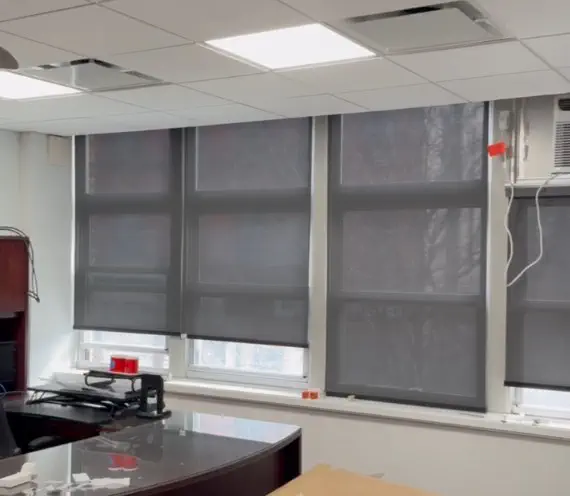 than a decorative residential kitchen.
Suitable designs include:
- Flat commercial-grade valances.
- Solid brand-coordinated colors.
- Stain-resistant fabrics.
- Minimal pleating.
- Valances layered with roller or solar shades.
The goal is to make the space feel finished without introducing a treatment that is difficult to clean or visually distracting.
Businesses evaluating blinds, shades, and curtains can also explore Blinds Crafter’s broader commercial and custom window covering solutions.
How to Measure for a Kitchen Window Valance
Even the best kitchen window valance ideas can produce a poor result when the width, mounting area, fabric drop, or surrounding cabinet clearance is measured incorrectly.
Before ordering, determine:
- Whether the valance will be mounted inside or outside the window frame.
- How much hardware must be concealed.
- Whether cabinets, crown molding, faucets, or handles restrict the mounting area.
- How much glass should remain visible.
- Whether the fabric pattern must be centered.
- Whether another blind or shade will be installed underneath.
An outside-mounted valance may visually widen the window and hide more hardware. An inside-mounted treatment produces a more integrated appearance but requires sufficient frame depth and precise measurements.
Do not rely on the glass dimensions alone. Measure the complete mounting area and check for handles, trim, tile, and nearby cabinet doors that could interfere with installation.
Choosing the Best Fabric for a Kitchen Valance
| Fabric Type | Best Use | Main Consideration |
|---|---|---|
| Performance polyester | Sink areas and active family kitchens | Easy maintenance and good shape retention |
| Cotton blend | Farmhouse and casual kitchens | Check washing and shrinkage instructions |
| Linen blend | Modern and transitional interiors | Offers texture with easier care than some natural linens |
| Sheer fabric | Low-impact areas needing softness | Does not provide meaningful privacy alone |
| Velvet or heavy decorative fabric | Formal dining sections away from cooking areas | Can retain dust and cooking residue |
| Printed fabric | Neutral kitchens needing color | Pattern scale should match the window size |
Always review the fabric’s cleaning instructions before finalizing a custom treatment. A material that looks attractive in a showroom may not be practical above a busy sink or near a food-preparation area.
A Practical Kitchen Valance Design Example
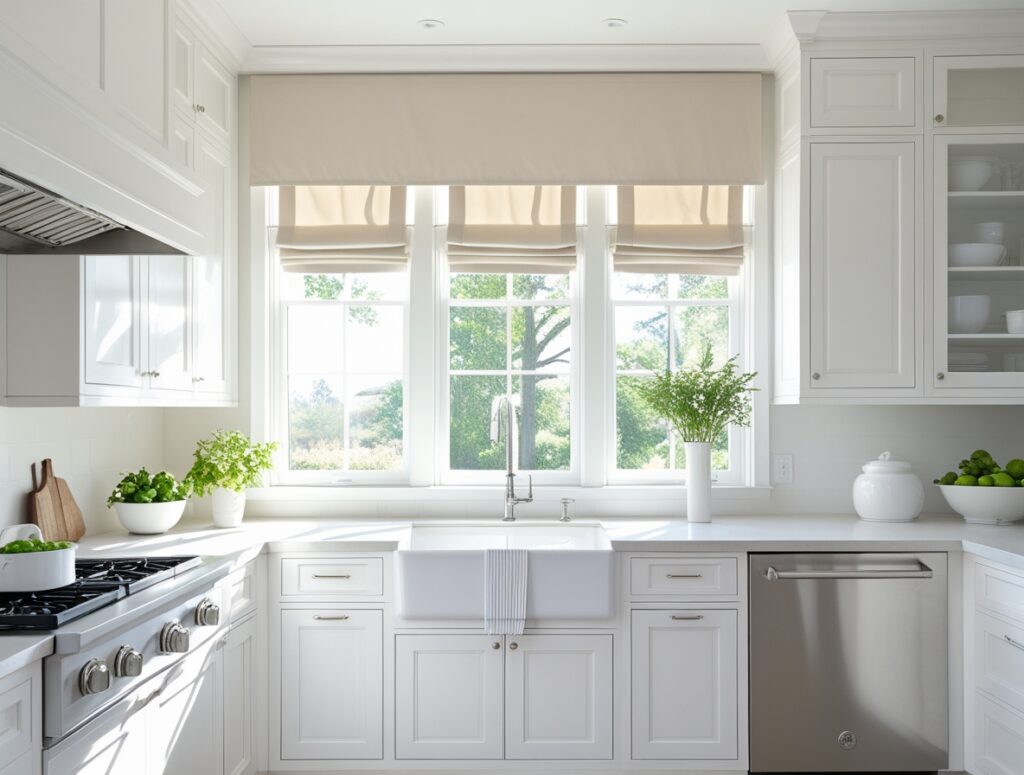
Consider a family kitchen with white shaker cabinets, a subway-tile backsplash, and a window directly above the sink. The neighboring house is visible through the lower half of the glass, but the homeowners still want natural daylight.
A decorative valance alone would not solve the privacy problem.
A more complete solution would be:
- An inside-mounted moisture-resistant blind for adjustable privacy.
- A tailored outside-mounted valance to conceal the blind headrail.
- A washable linen-look fabric to soften the white cabinetry.
- Narrow blue or green banding that connects with nearby accessories.
- A shallow profile that remains clear of the faucet and preserves the view.
This solution addresses privacy, cleaning, proportion, and interior design at the same time. It is more effective than selecting a valance based only on a fabric sample.
Common Kitchen Valance Mistakes
Using Too Much Fabric
Deep swags and excessive gathers can block daylight and overwhelm a small kitchen window.
Relying on the Valance for Privacy
A valance covers only the upper section of the window. Add a blind, shade, café curtain, or shutter when privacy is required.
Choosing Fabric Without Considering Cleaning
Highly textured or delicate materials may collect cooking residue and may be unsuitable for frequent cleaning.
Ignoring the Faucet and Cabinet Doors
A treatment may look correct on paper but interfere with a tall faucet, cabinet door, or window handle after installation.
Matching Every Kitchen Surface
The fabric does not need to repeat the exact cabinet, backsplash, wall, and countertop colors. Choose one or two visual connections and allow the valance to complement the room naturally.
Ordering Before Final Measurements
Small measurement errors can affect pattern alignment, hardware coverage, and the overall proportion of a custom valance.
Custom Valances vs. Ready-Made Valances
When evaluating kitchen window valance ideas, ready-made valances may work for standard windows when the fabric, width, and mounting style already match the room.
A custom valance is more suitable when:
- The window is unusually wide, narrow, or asymmetrical.
- The fabric pattern must align with the center of the window.
- Cabinets limit the available mounting space.
- The valance will conceal a blind or shade headrail.
- Several windows need coordinated proportions.
- A specific fabric, trim, or pleat style is required.
- The treatment must match a commercial interior or brand palette.
Custom design is not simply about selecting a more expensive fabric. It is primarily about controlling dimensions, proportion, placement, construction, and coordination.
Blinds Crafter can help homeowners and businesses compare fabrics, valance profiles, blinds, shades, and layered window treatment options. Customers in the region can also explore our custom window coverings in New York, NY.
Frequently Asked Questions About Kitchen Window Valances
Are kitchen window valances outdated?
Kitchen valances are not outdated when the shape, fabric, and proportions suit the room. Tailored flat valances, simple box pleats, neutral textures, and clean contrast borders can work well in modern interiors. Excessive ruffles, oversized swags, and heavy ornamentation may make a treatment feel dated in a contemporary kitchen.
What is the best valance for a window over the sink?
A compact, washable, and relatively flat valance is usually the most practical choice over a sink. It should remain clear of the faucet and should not use excessive folds that can retain moisture or residue.
Can I use a valance with blinds?
Yes. Pairing a valance with blinds allows the blind to control light and privacy while the valance hides the headrail and adds fabric, color, or pattern. Moisture-resistant blinds are especially useful in active kitchens.
Should a kitchen valance match the cabinets?
It does not need to match the cabinets exactly. The fabric can repeat a cabinet color in a stripe, border, or small part of the pattern. It can also coordinate with the backsplash, hardware, countertop, or dining furniture.
What fabric is easiest to clean?
Washable polyester, performance fabric, and certain cotton or linen blends are generally practical options. Always follow the specific fabric manufacturer’s cleaning instructions.
Can a valance make a small kitchen window look larger?
A clean valance mounted slightly above or beyond the frame can visually increase the height or width of a window. The result depends on the mounting position, fabric volume, pattern scale, and surrounding cabinetry.
Create a Valance That Fits the Way Your Kitchen Works
The best kitchen window valance ideas begin with the way the room is actually used. A treatment above a busy sink requires a different fabric and construction method than one in a quiet breakfast nook. Privacy needs, sunlight, cabinet placement, window dimensions, and cleaning requirements should all influence the final design.
Blinds Crafter produces custom window treatments for family homes and commercial interiors. Our team can help you select the right valance style, coordinate it with blinds or shades, and create a treatment measured for your specific window.
Review the differences between curtains and drapes before planning a larger layered window design.
Ready to compare fabrics, styles, and mounting options? Request a custom window treatment consultation with Blinds Crafter.