

Window Treatments Guide: How to Choose the Best Blinds, Shades or Shutters for Your Home
Choosing the right window treatments can completely transform the look, comfort, and functionality of your home. The right solution can add privacy, control natural light, improve energy efficiency, enhance interior design, and make everyday living more convenient.
This Window Treatments Guide will help you compare blinds, shades, shutters, curtains, and custom window coverings so you can choose the best option for your home.
But with so many options available—blinds, shades, shutters, curtains, drapes, motorized systems, and custom window coverings—it can be difficult to know where to start.
Discover how to choose the best window treatments for your home. Compare blinds, shades, shutters, privacy, light control, style, and custom options.
This guide will help you understand the most popular types of window treatments, how they differ, and which option may work best for your space, style, and lifestyle.
What Are Window Treatments?
This Window Treatments Guide explains that window treatments are products used to cover, decorate, or control the function of windows, offering both decorative and practical benefits.
Common types of window treatments include:
- Blinds
- Shades
- Shutters
- Curtains
- Drapes
- Sheer coverings
- Motorized window treatments
- Custom window coverings
The best window treatment does more than simply cover a window. It should support your daily needs, whether that means more privacy in a bedroom, better light control in a living room, insulation for energy efficiency, or a modern smart-home upgrade.
Why Choosing the Right Window Treatment Matters
This Window Treatments Guide explains why window treatments play a major role in how a room feels and functions. They affect the amount of light entering your home, the level of privacy you have, and even how comfortable the room feels throughout the day.
As this Window Treatments Guide highlights, the right choice can help you:
- Reduce glare
- Improve privacy
- Block or filter sunlight
- Protect furniture from UV damage
- Add warmth and texture to your interior
- Improve energy efficiency
- Create a more polished, custom-designed look
- Make large or hard-to-reach windows easier to control
Because every room has different needs, this Window Treatments Guide also makes it clear that there is no single window treatment that works perfectly everywhere. The best solution depends on the window size, room function, design style, and how much light or privacy you want.
Blinds vs Shades vs Shutters: What’s the Difference?
Before choosing a window treatment, it is important to understand the difference between the three most common options: blinds, shades, and shutters.
Blinds
In this Window Treatments Guide, blinds are explained as window coverings made with adjustable slats that can tilt open or closed. This gives you strong control over light and privacy.
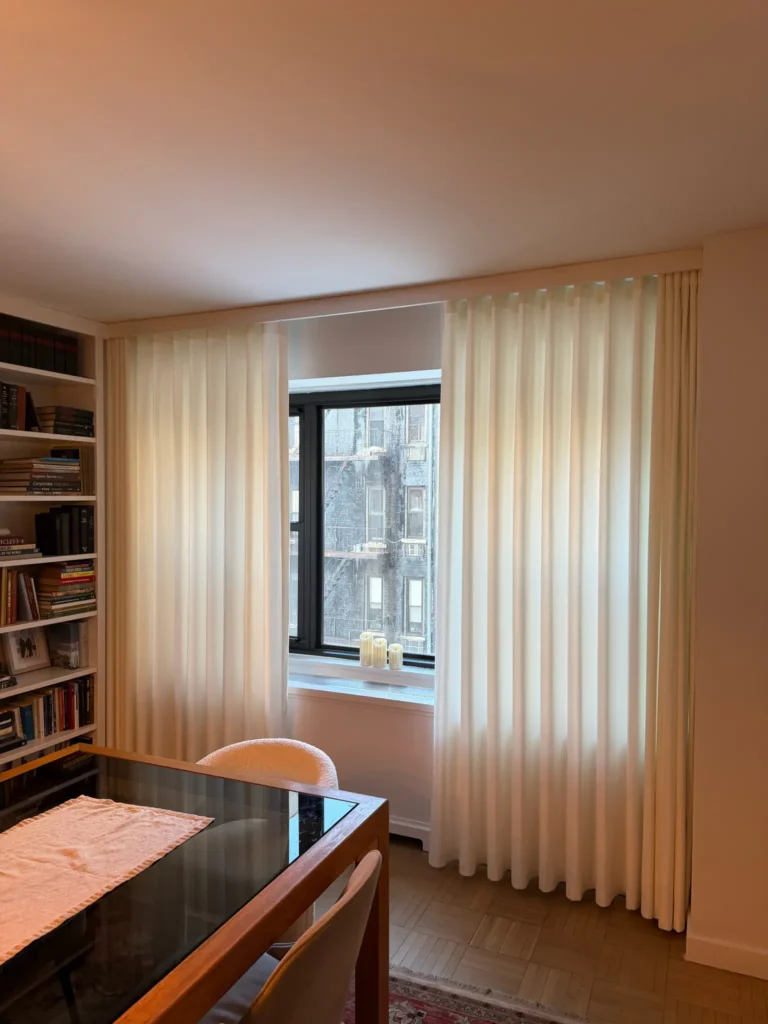
Popular types of blinds in this Window Treatments Guide include:
- Wood blinds
- Faux wood blinds
- Vertical blinds
- Aluminum blinds
- Motorized blinds
- Patio door blinds
As part of this Window Treatments Guide, blinds are presented as a practical option for homeowners who want adjustable light control and a clean, structured look.
They work especially well in:
- Living rooms
- Bedrooms
- Kitchens
- Home offices
- Patio doors
- Large windows
This Window Treatments Guide also notes that for a natural and warm look, wood blinds are a strong choice. For areas with moisture, such as kitchens or bathrooms, faux wood blinds may be more practical.
Shades
Shades are made from a continuous piece of fabric or material that raises and lowers over the window. Unlike blinds, shades usually do not have slats.
Popular types of shades include:
- Roller shades
- Roman shades
- Zebra shades
- Cellular shades
- Solar shades
- Sheer shades
- Motorized shades
Shades are often chosen for their softer appearance and wide variety of fabrics, textures, opacity levels, and colors.
They are ideal for homeowners who want:
- A modern look
- Soft light filtering
- Blackout options
- Energy efficiency
- Decorative fabrics
- A clean, minimal design
For example, roller shades are simple and modern, while Roman shades add a more elegant and decorative look. Cellular shades, also known as honeycomb shades, are a great option for insulation and energy efficiency.
Shutters
Shutters are solid window coverings with louvers that can be adjusted to control light and privacy. They are typically more permanent than blinds or shades and can add a classic, high-end look to a home.
Shutters are often used in:
- Living rooms
- Dining rooms
- Bedrooms
- Front-facing windows
- Traditional or transitional interiors
They are durable, attractive, and timeless, but they may not be the best fit for every budget or every window type.
Best Window Treatments by Room
This Window Treatments Guide explains that each room in your home has different window treatment needs. A bedroom may require privacy and blackout control, while a living room may need filtered light and visual appeal. For that reason, this Window Treatments Guide breaks down the best options by room, function, privacy, and light control.
Living Room Window Treatments
The living room is often one of the most visible spaces in the home, so style matters. At the same time, you may want to reduce glare, protect furniture from sunlight, and maintain privacy.
Good options include:
- Roller shades
- Roman shades
- Wood blinds
- Zebra shades
- Sheer shades
- Motorized shades
If your living room has large windows, motorized shades can make daily use much easier.
Bedroom Window Treatments
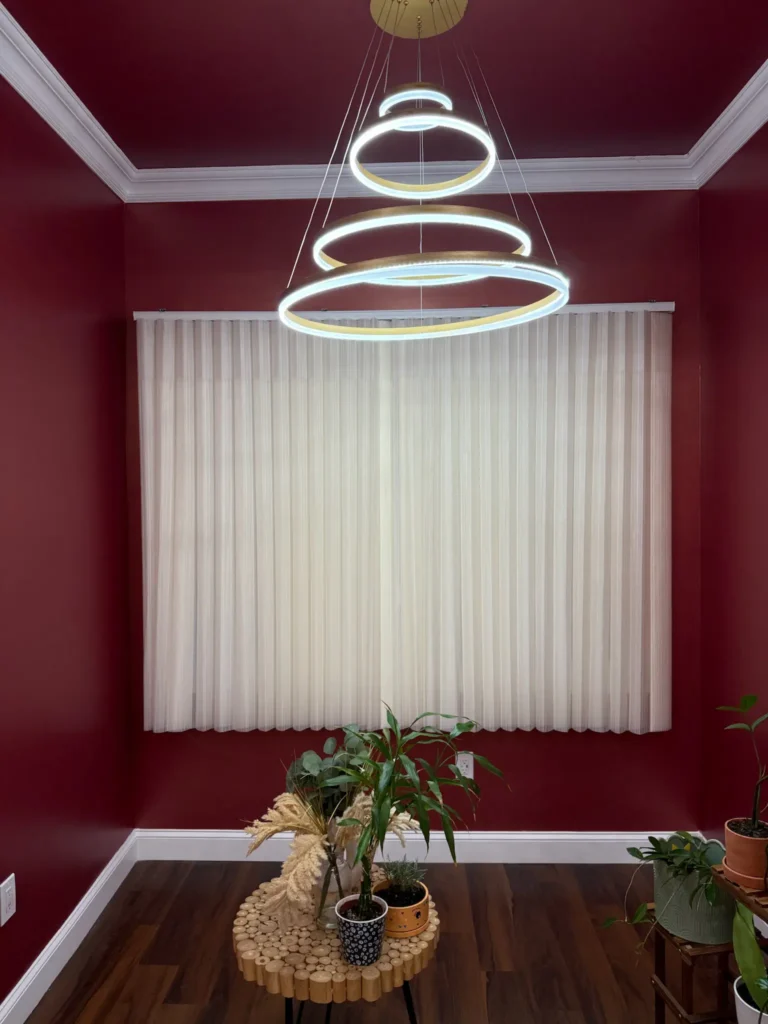
Bedrooms need privacy, comfort, and light control. Many homeowners prefer room-darkening or blackout options for better sleep.
Good options include:
- Blackout roller shades
- Cellular shades
- Wood blinds
- Faux wood blinds
- Roman shades
- Motorized shades
For maximum comfort, consider combining shades with drapery for added softness and insulation.
Kitchen Window Treatments
Kitchen window treatments should be easy to clean and resistant to moisture, heat, and daily use.
Good options include:
- Faux wood blinds
- Roller shades
- Solar shades
- Aluminum blinds
Real wood may not always be the best option in humid or high-moisture areas, so faux wood is often a more practical alternative.
Bathroom Window Treatments
Bathrooms require privacy and moisture resistance. The best bathroom window treatments should be durable and easy to maintain.
Good options include:
- Faux wood blinds
- Vinyl shutters
- Roller shades
- Cellular shades with moisture-friendly materials
Privacy should be the top priority in bathrooms, but natural light can still be preserved with the right material and opacity level.
Home Office Window Treatments
A home office needs glare control, comfort, and a professional appearance. If you work on a computer, reducing sunlight glare is especially important.
Good options include:
- Solar shades
- Roller shades
- Wood blinds
- Zebra shades
- Motorized shades
Solar shades are especially useful because they reduce glare while still allowing outdoor visibility.
Window Treatments for Large Windows and Patio Doors
Large windows and sliding glass doors need treatments that are functional, durable, and easy to operate.
Good options include:
- Vertical blinds
- Panel track shades
- Roller shades
- Solar shades
- Motorized shades
- Patio door blinds
For wide windows or hard-to-reach areas, motorization can be a major upgrade.
Best Window Treatments for Privacy
If privacy is your main concern, choose materials and styles that limit visibility from outside while still supporting your preferred amount of natural light.
Strong privacy options include:
- Wood blinds
- Faux wood blinds
- Cellular shades
- Blackout roller shades
- Roman shades
- Shutters
Blinds are especially useful because the slats can be tilted to control visibility without fully blocking daylight.
Best Window Treatments for Light Control
Light control is one of the most important reasons homeowners invest in custom window treatments.
For soft filtered light, consider:
- Sheer shades
- Light-filtering roller shades
- Zebra shades
- Roman shades
For stronger light blocking, consider:
- Blackout roller shades
- Cellular shades
- Room-darkening shades
- Layered treatments
Zebra shades are a great option if you want flexibility. Their alternating sheer and solid fabric bands allow you to shift between light filtering and privacy.
Kitchens require a more specific approach than many other rooms. The treatment may be exposed to steam, grease, food residue, and frequent cleaning, while the window may also sit directly above a sink or between cabinets. Homeowners who want to add fabric without covering the full window can explore our kitchen window treatments with valances for style, material, and layering recommendations.
Best Energy-Efficient Window Treatments
Some window treatments can help improve insulation by reducing heat transfer through windows. This can make rooms feel more comfortable during both hot and cold seasons.
Energy-efficient options include:
- Cellular shades
- Honeycomb shades
- Roman shades with lining
- Shutters
- Layered window treatments
Cellular shades are one of the most popular options for energy efficiency because their honeycomb structure helps trap air and create insulation.
Motorized Window Treatments for Smart Homes
In this Window Treatments Guide, motorized window treatments are highlighted as an increasingly popular option for modern homes. They allow you to control blinds or shades with a remote, wall switch, smartphone app, or smart-home system.
Motorized options are especially useful for:
- Large windows
- High windows
- Bedrooms
- Media rooms
- Living rooms
- Smart homes
- Homes with children or pets
Motorized blinds and shades also remove the need for cords, creating a cleaner and safer appearance.
As this Window Treatments Guide explains, they can be scheduled to open in the morning, close during peak sunlight, or adjust automatically based on your daily routine.
Custom Window Treatments vs Ready-Made Options
Ready-made window treatments may work for basic window sizes, but they often leave gaps, fit poorly, or fail to match the exact design of your room.
Custom window treatments offer several advantages:
- Accurate measurements
- Better fit
- More material choices
- More colors and finishes
- Professional installation
- Cleaner appearance
- Better light control
- Improved long-term performance
With custom blinds, shades, or shutters, the final result looks more intentional and polished.
How Much Do Window Treatments Cost?
The cost of window treatments can vary depending on several factors. There is no single fixed price because every project is different.
Pricing may depend on:
- Window size
- Number of windows
- Product type
- Material or fabric
- Manual vs motorized operation
- Installation requirements
- Custom measurements
- Special shapes or large windows
- Design preferences
For example, a simple roller shade will usually have a different price range than a motorized shade, wood blind, or custom shutter.
The best way to get an accurate price is to schedule a consultation and measurement. This allows the window treatment specialist to evaluate your space, understand your needs, and recommend the best options for your home.
Window Treatments Guide: How to Choose the Best Option for Your Home
When choosing window treatments, start with your main goal.
| Your Need | Best Options |
|---|---|
| More privacy | Wood blinds, faux wood blinds, cellular shades, shutters |
| Better light control | Roller shades, zebra shades, window blinds, blackout shades |
| Energy efficiency | Cellular shades, honeycomb shades, lined Roman shades |
| Modern design | Roller shades, solar shades, motorized shades |
| Classic style | Wood blinds, shutters, Roman shades |
| Large windows | Vertical blinds, roller shades, motorized shades |
| Smart-home convenience | Motorized blinds, motorized shades |
| Soft decorative look | Roman shades, sheer shades, curtains |
| Moisture resistance | Faux wood blinds, vinyl shutters, selected roller shades |
The best choice often combines function and design. A window treatment should look good, but it should also make the room more comfortable and easier to use.
Professional Measurement and Installation Matter
Even the best window treatment can look wrong if it is not measured or installed properly. Gaps, uneven mounting, poor alignment, and incorrect sizing can affect both appearance and performance.
Professional measurement and installation help ensure:
- A precise fit
- Smooth operation
- Better light control
- Cleaner lines
- Longer product life
- A more custom look
This is especially important for large windows, specialty windows, patio doors, and motorized systems.
Final Thoughts: The Right Window Treatment Makes a Difference
The best window treatments are the ones that match your home, your lifestyle, and the way you use each room.
Blinds are great for adjustable privacy and light control. Shades offer softness, style, and a wide range of fabric options. Shutters provide timeless beauty and durability. Motorized window treatments add convenience and smart-home functionality.
Whether you are updating one room or designing window coverings for your entire home, custom window treatments can help create a more comfortable, stylish, and functional living space.
Schedule a Custom Window Treatment Consultation
Not sure whether blinds, shades, or shutters are right for your home? A professional consultation can help you compare options, choose the right materials, and get accurate recommendations based on your windows, style, and budget.
Contact Blindscrafter today to explore custom window treatments designed for your home.
Use this Window Treatments Guide as a starting point to compare styles, materials, privacy levels, and light control options before choosing the right solution for your home.
FAQ Section
How do I use this Window Treatments Guide to choose the right option?
Start by identifying your main need, such as privacy, light control, energy efficiency, moisture resistance, or smart-home convenience. Then compare blinds, shades, shutters, and motorized options based on the room and window size.
What is the most popular type of window treatment?
Blinds and shades are among the most popular window treatments because they offer strong privacy, light control, and design flexibility. Roller shades, wood blinds, faux wood blinds, and cellular shades are especially common choices.
What is the difference between blinds and shades?
Blinds have adjustable slats that tilt open or closed. Shades are usually made from a continuous piece of fabric or material that raises and lowers. Blinds offer more adjustable light control, while shades often provide a softer and more modern appearance.
What window treatments are best for privacy?
Wood blinds, faux wood blinds, cellular shades, blackout roller shades, shutters, and Roman shades are all strong choices for privacy. The best option depends on the room, window size, and desired style.
What window treatments are best for energy efficiency?
Cellular shades, also called honeycomb shades, are one of the best options for energy efficiency because their structure helps insulate the window. Shutters and lined Roman shades can also help improve comfort.
Are custom window treatments worth it?
Yes, custom window treatments are often worth it because they provide a better fit, cleaner appearance, improved light control, and more design options than ready-made products. Professional measurement and installation can also improve long-term performance.
Are motorized window treatments a good choice?
Motorized window treatments are a great choice for large windows, hard-to-reach areas, smart homes, bedrooms, and media rooms. They provide convenience, safety, and a clean cordless look.